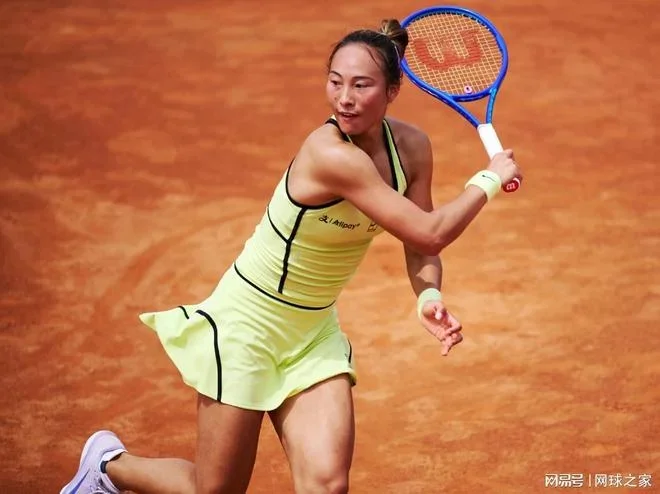

A recent article titled “What’s Wrong with Being Outspoken?” has gone viral across major platforms, sparking widespread debate. It uses Zheng Qinwen’s often-controversial confident statements as a starting point, defending her personality while taking aim at online trolls hiding behind keyboards. The piece has received significant support and sharing. However, I’ve been wondering: when one voice becomes overwhelmingly loud, are we missing something else?
**Who has the right to judge Zheng Qinwen?**
The answer is simple—no one but herself.
Zheng has long carried heavy external expectations, but frankly, such expectations are unnecessary. What exactly is everyone expecting from her? What do they want her to become?
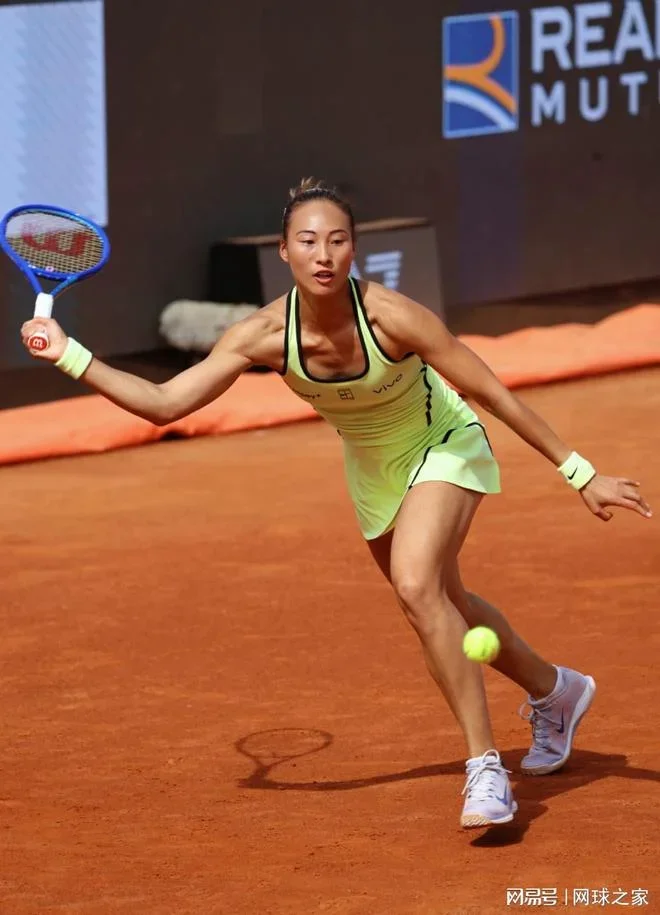
Objectively, her career achievements are the envy of many professional tennis players: a Grand Slam runner-up, a WTA Finals runner-up, a 1000-level tournament runner-up, a 500-level title, an Olympic gold medal, and a career-high ranking inside the world’s top five. Many players could spend their whole careers without reaching any of these milestones. So it’s hard for outsiders to evaluate her; only she herself has the authority to define her career’s success. The outside world has no say.
**The difference between confidence and rational clarity**
Recently, Zheng has again been thrust into the eye of a storm. After losing to Aryna Sabalenka in Miami, her comment “My technique is no worse than hers” sparked fierce debate. Following her loss to Jelena Ostapenko in Rome, many claimed her career had peaked. Countless netizens mocked her for being overconfident, saying she doesn’t have Li Na’s achievements but suffers from Li Na’s “disease.”
Yet many also admire her boldness, seeing her as a typical Gen Z athlete who dares to think, speak, and take responsibility—embodying the courage, ambition, and backbone modern youth and women should have.
However, after carefully reading “What’s Wrong with Being Outspoken?” several times, I noticed a critical issue worth pondering.
When we celebrate “defending freedom of expression,” do we indiscriminately accept controversial points that deserve careful scrutiny and objective evaluation? The article’s defense of the athlete’s individuality is brilliant and impactful. But does it swing from one extreme to another?
“Being outspoken is not wrong; confidence is justified” frames all of Zheng’s words within the boundaries of “confidence” and “outspokenness.” Does that mean any statement from an athlete, even if biased, should never be questioned by outsiders?
This is a complex question. It’s not about right or wrong but about different perspectives. Where is the line between healthy confidence and arrogance? Where will this powerful fan support lead?
**The “thorns” ignored in the celebration**
So let’s revisit the core reason behind the controversy over Zheng’s statements. Many people’s criticism isn’t just about her being “outspoken.” The deeper issue is that, despite eight consecutive losses to Sabalenka on hard courts, she still insists her technique is not inferior—only a matter of focus on key points. Moreover, in many of her high-profile post-match interviews, she rarely gives credit to her opponents’ outstanding performances.
If we put this in an adult workplace context, what would you think? A project manager who has lost eight consecutive bids to the same competitor tells senior management, “My ability is no worse than theirs; it’s just bad luck,” and almost never acknowledges the competitor’s strengths. Would you want to work with that person?
Zheng’s boldness is certainly admirable, but when faced with repeated defeats, does her self-centered persistence raise legitimate concerns? Is such concern completely unreasonable? At the very least, this deserves discussion.
**Uncontrolled adulation and distorted pressure push athletes into the abyss**
Here’s the problem: being outspoken is not wrong, but wrapping any controversy in the cloak of “outspokenness” and sanctifying it as beyond criticism is not only arrogant but harmful.
Today’s tennis media landscape, as the article notes, is the same for all athletes: win and everyone’s happy; lose and the abuse begins. Who doesn’t want to win? Who doesn’t try?
Some people are eager to put athletes on a pedestal, granting them “godhood,” inflating temporary victories into absolute strength, and tolerating no criticism. This isn’t limited to ordinary netizens—it includes influencers, celebrities, and powerful figures. Chinese sports’ “fan culture” (饭圈文化) is more complex than imagined: it involves business interests, gamblers’ madness, distorted psychology from obsessive admiration, and extreme praise that can destroy.
As someone accurately pointed out: Who has been pulling the strings, turning a normal person into a god? When we shower Zheng with phrases like “She will never lose,” do we forget she’s just a 22-year-old girl who sometimes loses matches?
And that’s only part of the problem. When Zheng did something against fans’ expectations—like unfollowing her longtime coach Pere Riba on social media in February—those who were worshiping her just days before immediately turned on her. Changing coaches is a normal career decision for a professional player; when did it become something for keyboard warriors to dictate?
The higher you lift an athlete, the harder they fall. Soon, accusations of “ingratitude” and “betrayal” flooded in. This is the ultimate irony: many who initially shouted “Freedom to be outspoken” are often the same ones who kick the hardest later. That’s the greatest hypocrisy.
The sports world has already begun pushing back against fan culture. Multiple athletes, including Zheng Qinwen and Wang Chuqin, have disbanded their fan groups. This signals a return to rationality. Zheng herself has said she hopes fewer people follow her, so she can live a normal life.
Those “true fans” who charge into battle under the banner of “anti-troll” are often guilty of cyberbullying others—selectively quoting, maliciously editing, fabricating stories. They treat normal ranking changes between Zheng and Wang Xinyu as if they were a threat, speculating maliciously and hoping for rivals to lose. This completely betrays the spirit of sports.
After seeing all this, tell me: where is the standard? Are those who stir up conflict cloaked in righteousness? Where is the line between “confidence” and “outspokenness”?
Another interesting question: when did cyberbullying become repackaged as “due pressure”? Many believe that athletes deserve criticism, and writers deserve negative comments, because it’s “free speech.” But when you fight back against such violence, you’re accused of being oversensitive. When did the world become so confused about right and wrong?
Those who wield knives to hurt others—cyberbullies, fanatical fans—transform themselves into righteous defenders of the athletes’ image and Chinese sports’ integrity. Meanwhile, the victims are brainwashed into believing this is just “pressure they should accept.” Where is the logic?
**Conclusion**
We must remain clear: Zheng Qinwen is human, not a perfect god, and she doesn’t need anyone to deify her. She is a young tennis player with the Gen Z spirit of being herself—bold and free—while also having technical weaknesses and emotional instability. Her confidence deserves applause, but as responsible commentators and rational tennis media audiences, we should offer more substantive, constructive support—not a suffocating, indulgent love that backs her into a corner.
In fact, even though I’ve been skeptical about her path back to